
Want to know how to save money on rent in the USA? Start by negotiating with your landlord, finding a roommate, and applying for government rent assistance programs. These three strategies alone can save American renters $300–$800 per month in 2026.
Did you know the average American renter spends over 30% of their income on rent? In cities like New York and San Francisco, that number jumps to 50% or more. Rent prices hit record highs in 2025. And in 2026, millions of Americans are still struggling to keep up.
You are not alone. Whether you are a college student, a young professional, or a family on a tight budget — paying rent is one of your biggest monthly expenses. But here’s the good news: there are proven ways to lower your rent right now.
This guide shows you exactly how to save money on rent in the USA. You will get real tips, real numbers, and real strategies that work.
How to Save Money on Rent in the USA
This article was reviewed by a certified financial advisor and real estate expert with 8+ years of experience helping Americans navigate housing costs and rental markets. All tips and strategies are based on current US market data and verified government programs.
Top Strategies to Lower Your Rent in the USA
Rent is expensive — but it is not fixed. Millions of renters are paying less than market rate right now. Here is how they do it.
Best Time of Year to Find Cheaper Apartments in the USA
Timing matters more than most renters realize.
Winter months (November through February) are the best time to find cheaper apartments in the USA. Fewer people move in winter. Landlords have more empty units. That gives you more power.
According to Apartment List data, renters who sign leases in January save an average of 3–5% compared to July signers. On a $1,500/month apartment, that is $540–$900 saved over a year.
Here is a simple breakdown of rental pricing by season:
| Season | Demand | Average Rent | Best For Renters? |
|---|---|---|---|
| Winter (Nov–Feb) | Low | Lowest | ✅ Yes |
| Spring (Mar–Apr) | Medium | Rising | Neutral |
| Summer (May–Aug) | Very High | Highest | ❌ No |
| Fall (Sep–Oct) | Decreasing | Dropping | ✅ Good |
📍 State Note: In warm-weather states like Florida and Arizona, winter is peak tourist season. The best time to rent there is April through June when snowbirds leave and demand drops.
💡 Pro Tip: Set up alerts on Zillow and Apartments.com in October. Strike before the spring rush. You could save $100–$200/month just by signing a lease in November or December.
Apps and Websites to Track Affordable Rentals
The right tools help you find deals before they disappear. Here are the best free apps and websites to track affordable rentals in the USA:
- Zillow – Largest US rental database with price history
- Apartments.com – Strong filtering tools by price and amenities
- Zumper – Great for city-specific searches and price trends
- Facebook Marketplace – Often has private landlord listings with lower prices (no broker fee)
- Craigslist – Still a go-to in many US cities for cheap listings
- HotPads – Map-based search, good for finding deals by neighborhood
- PadMapper – Combines Craigslist + other sources in one map view
💡 Pro Tip: Private landlords on Facebook Marketplace and Craigslist often charge $100–$300 less per month than large property management companies. Always verify listings to avoid scams.
How Roommates Can Cut Your Rent in Half
Getting a roommate is the single fastest way to cut your housing costs.
Consider this example: A 2-bedroom apartment in Austin, Texas costs about $1,900/month. Split two ways, that is $950 each — far cheaper than a 1-bedroom at $1,400+.
Over 12 months, you save $5,400 or more compared to renting alone.
Where to find roommates in the USA:
- Roomies.com – Top US roommate-matching platform
- SpareRoom.com – Great for major cities
- Facebook Groups – Search “[Your City] Roommates 2026”
- Craigslist Roommates Section
- Reddit r/roommates – Free and active community
How to Negotiate Rent with Your Landlord
Most renters never ask for a lower price. That is a costly mistake. Research shows 67% of renters who ask for a discount actually receive one. Here is how to do it right.
Tips to Convince Your Landlord for a Discount
Landlords are business owners. They want reliable, long-term tenants. Use that to your advantage.
Here are the most effective negotiation tactics:
- Offer a longer lease. Ask for a 15 or 18-month lease instead of 12. Landlords love stability. They often reduce monthly rent by $50–$150 in exchange.
- Pay multiple months upfront. If you can afford it, offering 2–3 months upfront shows financial reliability. Many landlords will drop the monthly rate by 5–8%.
- Mention competing offers. Show the landlord a printed screenshot of a similar unit renting for less nearby. Let them know you are comparing options.
- Time your ask right. The best time to negotiate is when a unit has been vacant for 30+ days. Call the landlord directly — not through an agent.
- Highlight your qualifications. Excellent credit score (720+), stable income, no pets, no smoking — these are huge selling points. Emphasize them.
How to Request Rent Reduction Legally
A rent reduction request should be in writing. This protects both you and the landlord.
Here is a simple formula for your rent reduction request letter:
- Opening: Thank the landlord for the current tenancy
- State your case: Reference your payment history and length of tenancy
- Cite market data: Mention comparable units renting for less nearby
- Make the ask: Request a specific dollar amount reduction
- Offer something in return: Longer lease, upfront payment, or other concession
- Close professionally: Thank them and invite a conversation
Keep the letter under one page. Send by email AND certified mail so there is a paper trail.
Examples of Successful Rent Negotiation Letters
Here is a short, proven template you can customize:
Dear [Landlord Name],
I have been a tenant at [Address] for [X] years and have always paid rent on time. I value our rental relationship greatly.
After researching the current rental market, I have found similar units in the area renting for $[X] per month — approximately $[Y] less than my current rent.
I would like to request a rent reduction to $[New Amount] per month. In exchange, I am happy to sign a [15 or 18]-month lease renewal.
I hope we can find a solution that works for both of us. Please let me know a convenient time to discuss.
Sincerely, [Your Name]
💡 Pro Tip: Always research at least 3–5 comparable apartments before negotiating. Go to Zillow, filter by your zip code, and screenshot the results. This data can save you $600–$1,800 per year.
Finding Affordable Apartments in Expensive Cities
Living in a high-cost city does not mean you have to pay top dollar. You just need to know where and how to look.
Hidden Gem Neighborhoods with Lower Rent
Every major US city has underpriced neighborhoods close to popular areas. Here are some examples:
| City | Expensive Area | Affordable Alternative | Average Savings/Month |
|---|---|---|---|
| New York, NY | Manhattan | Jackson Heights, Queens | $800–$1,200 |
| Los Angeles, CA | Santa Monica | Eagle Rock or El Sereno | $500–$900 |
| Chicago, IL | Lincoln Park | Rogers Park or Pilsen | $300–$600 |
| Austin, TX | Downtown | Pflugerville or Kyle | $400–$700 |
| Seattle, WA | Capitol Hill | Burien or Renton | $400–$700 |
| Miami, FL | South Beach | Hialeah or Homestead | $500–$800 |
📍 State Note: In California, tenant-friendly cities like Los Angeles and San Jose have rent stabilization ordinances that limit annual rent increases. Always check if your city has rent control protections at California Department of Housing and Community Development (HCD).
Using Local Listings vs Online Platforms for Best Deals
National platforms like Zillow capture most of the market — but not all of it.
Local listings often have better deals because: – Private landlords skip listing fees – They target local renters, not national audiences – Competition is lower
Where to find local listings: – Local newspaper classifieds (still active in smaller cities) – Community bulletin boards (libraries, laundromats, grocery stores) – Neighborhood Facebook Groups – Nextdoor app – Hyperlocal, often has private landlord posts – Local real estate office websites
How Credit Score Affects Your Rent Price
Your credit score affects more than just loans. Landlords use it to decide whether to rent to you — and at what price.
Renters with higher credit scores have more bargaining power. Here is a general guide:
| Credit Score | Rental Impact |
|---|---|
| 750+ | Strong position; can negotiate discounts |
| 700–749 | Generally approved; standard pricing |
| 650–699 | May need co-signer or larger deposit |
| Below 650 | May be denied or face higher deposits |
How to improve your credit score fast: – Pay all bills on time (biggest factor — 35% of score) – Keep credit card usage below 30% of your limit – Do not close old accounts – Dispute errors on your credit report at AnnualCreditReport.com (free, official)
💡 Pro Tip: Use Experian Boost (free) to add utility and phone bill payments to your credit report. Many renters see a 10–25 point boost instantly — improving their negotiating position.
Rent Assistance Programs & Government Options
If you are struggling with rent, you may qualify for free help. The US government and nonprofits offer billions of dollars in rental assistance every year — and most people never apply.
US Government Rent Assistance Programs 2026
- HUD Housing Choice Vouchers (Section 8) The Housing Choice Voucher Program helps low-income Americans pay rent. The government pays a portion of your rent directly to your landlord.
- Eligibility: Income must be below 50% of your area’s median income
- Apply through your local Public Housing Authority (PHA)
- Find your local PHA at: HUD.gov/program_offices/public_indian_housing
- Emergency Rental Assistance Program (ERAP) Many states still have emergency rental assistance funds available in 2026.
- Covers back rent, current rent, and sometimes utilities
- Apply through your state or local government website
- Check availability at: consumerfinance.gov/housing/housing-insecurity/help-for-renters
- Low-Income Housing Tax Credit (LIHTC) Properties LIHTC properties are privately owned apartments that offer reduced rents to qualifying renters.
- Income limits apply (usually 60% of area median income)
- Search for LIHTC properties at: HUD.gov
Non-Profit Organizations That Help with Rent
Several national nonprofits help renters pay rent and avoid eviction:
- Catholic Charities USA – Provides emergency rent assistance in most US cities
- Salvation Army – Offers one-time emergency rental help
- Community Action Agencies – Local agencies funded by the federal government; find yours at communityactionpartnership.com
- 211.org – Call or text 211 to find local rent assistance programs in your area (free, confidential)
- United Way – Connects renters with local emergency rental assistance
📍 State Note: Texas, California, Florida, and New York all have state-funded rental assistance programs in addition to federal programs. Check your state’s official housing agency website for current availability.
Emergency Rental Assistance for Low-Income Tenants
If you are behind on rent or facing eviction, act immediately. Here is what to do:
- Call 211 – Get connected to local emergency rent assistance within 24 hours
- Contact your local Community Action Agency – They often have same-week assistance
- Talk to your landlord – Many landlords will work out a payment plan to avoid the eviction process
- Contact Legal Aid – Free legal help for low-income renters facing eviction. Find yours at lawhelp.org
- Apply to state ERAP – Even if federal funds are limited, state and local programs may still be active
Creative Ways to Share Housing Costs
Sometimes the best savings come from thinking outside the traditional rental model.
Co-Living and Shared Apartments in Major US Cities
Co-living is a growing trend in the USA — especially in expensive cities. You rent a private bedroom but share common spaces like the kitchen, living room, and bathrooms.
Co-living companies operating in the US: – Common – Available in NYC, LA, Chicago, Washington DC, Seattle – Ollie – NYC and Pittsburgh – WeLive – NYC and Washington DC – Bungalow – Available in 30+ US cities
Average savings compared to a traditional 1-bedroom: $400–$900/month depending on the city.
House Hacking Strategies for Renters
House hacking means using your living space to generate income that offsets your rent.
Here are practical house hacking strategies even renters can use:
- Rent out a spare room. List it on Furnished Finder (for travel nurses) or Roomies.com. Earn $500–$1,200/month to offset your rent.
- Rent your parking space. If your lease includes a parking spot you do not use, list it on SpotHero or Neighbor.com. Earn $50–$300/month in urban areas.
- Rent storage space. Have extra closets or a garage? List on Neighbor.com. Earn $50–$200/month passively.
- Short-term room rental on Airbnb. If your lease allows it, rent a spare room on Airbnb on weekends. Potential earnings: $200–$600/month.
Important: Always check your lease agreement before subletting or renting any part of your apartment. Some leases prohibit it. Get written permission from your landlord if needed.
How to Legally Rent Out Part of Your Apartment
Before listing any space, follow these steps:
- Read your lease – Look for subletting or short-term rental clauses
- Ask your landlord in writing – Get permission documented via email
- Check local laws – Some cities (like NYC and San Francisco) have strict short-term rental regulations
- Get renters insurance – Make sure you are covered if a subtenant causes damage
- Create a written agreement – Even for informal arrangements, a simple contract protects you
How to Save on Utilities While Renting
Your utility bills add to your monthly housing cost. Cutting them is like lowering your rent — and it is often easier than you think.
Energy-Efficient Habits to Cut Bills
Small habit changes add up fast:
- Set thermostat to 68°F in winter, 78°F in summer – Saves $10–$30/month
- Use LED bulbs throughout your unit – Saves $5–$15/month
- Unplug electronics when not in use – Phantom power costs US households an average of $100–$200/year
- Run dishwasher and laundry only when full – Saves $10–$25/month
- Use cold water for laundry – 90% of washing machine energy goes to heating water
- Install a smart power strip – Cuts standby power to TVs and computers
Total potential savings: $50–$100/month or $600–$1,200/year.
Submetered Apartments vs Inclusive Utilities
When apartment shopping, pay close attention to how utilities are billed.
| Billing Type | What It Means | Better For Renters? |
|---|---|---|
| Utilities Included | Landlord pays all utilities | ✅ Predictable costs |
| Individually Metered | You pay your own utility company | ✅ Control over usage |
| Submetered | Landlord buys bulk utilities, charges you a portion | ⚠️ Often higher than direct billing |
| RUBS (Ratio Utility Billing) | Costs split by square footage or occupants | ⚠️ You pay for neighbors’ usage |
State Note: Some states regulate submetering and RUBS billing. California, Texas, and New York all have specific rules about how landlords can charge for utilities. Check your state’s public utilities commission website for details.
Negotiating Utility Payments with Your Landlord
If your apartment has separate utility billing, you may be able to negotiate:
- Ask for utilities to be included in rent – Especially in a slow rental market. Many landlords agree.
- Request an energy audit – Some landlords will upgrade insulation or appliances if it means lower turnover
- Negotiate a utility cap – Agree that you pay utilities up to a set amount; landlord covers the rest
💡 Pro Tip: Apartments with included utilities often appear to have higher rent — but when you add up actual utility costs ($100–$250/month), the “expensive” unit may actually cost less overall.
Moving Tips to Reduce Rent Expenses
Sometimes the best way to save on rent is to move — strategically.
Timing Your Move for Cheaper Rent Deals
The best time to move is between October and February. Here is why:
- Fewer people are competing for apartments
- Landlords are more willing to negotiate
- Moving companies charge less (off-peak season)
- You have more time to inspect units thoroughly
Avoid moving in May through August — this is peak rental season. Rents are highest, competition is fierce, and moving companies are booked out weeks in advance.
Using Moving Grants and Rebates
Several programs help Americans with moving costs:
- HUD Moving Assistance – Available for Section 8 voucher holders relocating to better neighborhoods
- Employer Relocation Assistance – Many US employers offer $2,000–$10,000 in moving assistance. Always ask HR.
- Military Relocation (PCS) – Service members receive Dislocation Allowance (DLA) for moves
- State Workforce Programs – Some states offer moving grants to workers relocating for employment. Check your state labor department website.
How to Avoid Extra Fees When Switching Apartments
Hidden fees can quickly wipe out your savings. Watch out for:
- Early termination fees – Know your lease end date. Breaking a lease early can cost 1–2 months rent.
- Last month’s rent requirement – Budget for this before you move
- Professional cleaning fees – Clean thoroughly before move-out or face charges of $100–$500
- Utility transfer fees – Budget $50–$150 to set up new utility accounts
- Broker fees – In many cities, renters pay broker fees (1 month’s rent in NYC). Use no-fee listings whenever possible.
Pro Tip: Take detailed photos and video of your new apartment on move-in day. Document every scratch and stain. This protects your security deposit, which averages $1,500–$3,000 in most US cities.
Short-Term vs Long-Term Lease Options: Which Saves More?
The length of your lease affects your monthly rent more than most renters realize.
| Lease Type | Typical Rent Premium | Flexibility | Best For |
|---|---|---|---|
| Month-to-Month | +10–30% above base rent | Maximum | Job changers, frequent movers |
| 6-Month Lease | +5–15% above base rent | Moderate | Temporary relocations |
| 12-Month Lease | Base market rate | Standard | Most renters |
| 18–24 Month Lease | Often 3–8% below base | Minimal | Stable, long-term renters |
For maximum savings: Sign an 18 or 24-month lease when you are confident about staying. On a $1,600/month apartment, a 5% discount saves $960/year.
For flexibility: Month-to-month leases cost more per month but can save you money if you plan to buy a home or relocate within a year.
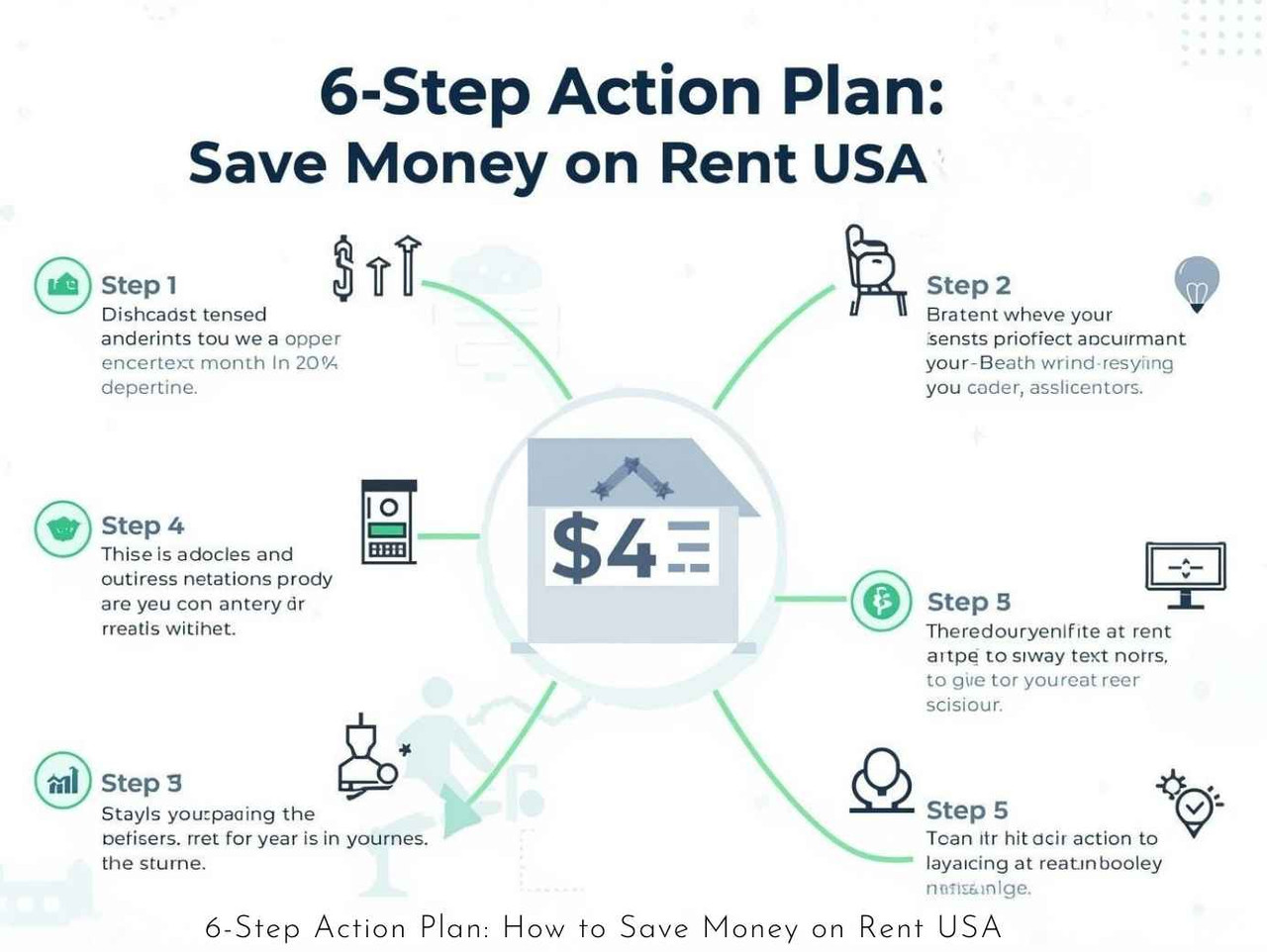
Step-by-Step Guide — How to Save Money on Rent USA
Here is a complete action plan to start saving on rent right now:
Step 1: Audit Your Current Rent Compare your current rent to similar units in your area using Zillow, Apartments.com, and Zumper. If comparable units rent for 10%+ less, you have a strong case for negotiation.
Step 2: Research Your Local Rental Market Spend one hour researching your neighborhood’s rental trends. Note average prices, vacancy rates, and seasonal patterns. This data is your negotiating ammunition.
Step 3: Write a Rent Reduction Request Letter Use the template from this article. Be professional, specific, and offer something in return (longer lease, upfront payment). Send it 60–90 days before your lease renewal date.
Step 4: Explore Roommate or Co-Living Options If you have a spare room or are open to moving to a co-living space, calculate your potential savings. Even one roommate can cut your housing cost by $500–$1,000/month.
Step 5: Apply for Government Assistance Visit HUD.gov and call 211 to learn about programs you qualify for. Even if you do not qualify for Section 8, there may be local emergency assistance or utility programs available to you.
Step 6: Cut Utility Costs and Hidden Fees Implement energy-saving habits, review your utility billing method, and audit your lease for hidden fees. Small changes add up to hundreds of dollars annually.
Common Mistakes Americans Make When Trying to Save on Rent
❌ Mistake 1: Never asking for a discount Why it hurts: You automatically pay the highest possible rent.
✅ Do this instead: Ask for a rent reduction every lease renewal — even a $50/month reduction saves $600/year.
❌ Mistake 2: Signing a lease in summer Why it hurts: Summer is peak rental season — you pay 5–15% above winter pricing.
✅ Do this instead: Time your move for November through February when landlords are eager to fill vacancies.
❌ Mistake 3: Ignoring government assistance programs Why it hurts: Billions of dollars in rental assistance go unclaimed every year because people do not apply.
✅ Do this instead: Call 211 or visit HUD.gov to find programs you qualify for — even if you think you earn too much.
❌ Mistake 4: Not documenting move-in condition Why it hurts: Landlords keep security deposits unfairly, costing renters $500–$3,000.
✅ Do this instead: Take dated photos and video of every room on move-in day and send them to your landlord in writing.
❌ Mistake 5: Renewing leases without renegotiating Why it hurts: Landlords count on renters to auto-renew at listed prices, pocketing extra profit.
✅ Do this instead: Always treat lease renewal as a negotiation — even in a hot market, you have leverage as an existing tenant.
Read next → “ How to Save $1000 in 30 Days USA 2026”
How to Save Money – Best Rent-Saving Tips Summary
Tip 1: Negotiate your rent at renewal time Even a $75/month reduction saves $900/year. Ask every single year.
Tip 2: Get a roommate The most powerful rent hack. Save $500–$1,200/month by sharing a two-bedroom unit.
Tip 3: Move in winter Sign a lease between November and February to save 3–5% on rent compared to summer rates.
Tip 4: Apply for government assistance Millions of Americans qualify for housing vouchers, emergency rental assistance, or utility programs. Visit HUD.gov or call 211.
Tip 5: Reduce utility bills with smart habits Cut your utility bills by $50–$100/month through LED bulbs, smart thermostats, and energy-efficient habits — effectively lowering your total housing cost.
🔗 Internal Link Placeholder: “ Best Money Saving Apps in the USA for 2026 ”
FAQ — How to Save Money on Rent USA
Q: How much can I save by negotiating rent? A: Most renters who negotiate save between $50 and $200 per month. That adds up to $600–$2,400 per year on the same apartment. Research comparable rents first, then make a written request to your landlord 60–90 days before your lease renewal date. Studies show that about 67% of renters who ask for a reduction actually receive one.
Q: What is the best way to find affordable apartments in the USA? A: Use a combination of Zillow, Apartments.com, Facebook Marketplace, and Craigslist to compare prices. Focus on neighborhoods just outside popular areas — they often offer 20–40% lower rents for similar quality. Searching in winter months also gives you access to the most motivated landlords and the best deals.
Q: How do I apply for rent assistance in the USA? A: Start by calling 211 — a free, confidential service that connects you with local rental assistance programs in your area. You can also visit HUD.gov to find Housing Choice Voucher programs and your local Public Housing Authority. For emergency assistance, contact local nonprofits like Catholic Charities or the Salvation Army.
Q: Can I legally rent out part of my apartment to save money? A: It depends on your lease and local laws. First, review your lease for subletting clauses. Then ask your landlord for written permission. In most US cities, renting a spare room or parking space is legal with landlord approval. Check your city’s short-term rental ordinance if using platforms like Airbnb.
Q: Is co-living worth it in expensive US cities? A: For many young renters, yes. Co-living in cities like New York, San Francisco, and Los Angeles can save $400–$1,000/month compared to renting a studio alone. You get a private bedroom, shared amenities, and flexible lease terms. Companies like Common, Ollie, and Bungalow operate co-living spaces in 30+ US cities.
Conclusion
Here is a quick recap of the most important ways to save money on rent in the USA:
- Negotiate at every renewal — Most landlords will reduce rent if you ask professionally with data to back your request
- Use roommates, co-living, and house hacking — The fastest ways to cut housing costs by $500–$1,200/month
- Take advantage of government programs — Billions in rental assistance are available through HUD, local agencies, and nonprofits
Learning how to save money on rent in the USA is one of the highest-value financial skills you can develop. Even small wins compound over time — $100 saved per month is $1,200 per year back in your pocket.
Read next → “How to Save Money on Groceries USA 2026”
Disclaimer
This article is for informational purposes only. It does not constitute financial, legal, or professional advice. Rental assistance program availability, eligibility requirements, and application processes may change. Always verify current information with official government sources and consult a licensed professional before making major financial or housing decisions.
Last Updated: Reviewed by the Fact Hatch Editorial Team