You can save money on your electric bill by switching to LED bulbs, using a smart thermostat, unplugging idle devices, and running appliances during off-peak hours. Most American households can cut their electric bill by $500–$1,500 per year with simple, no-cost or low-cost changes. USA Government programs like LIHEAP also offer free assistance to qualifying renters and homeowners.
🏛️ Expert Reviewed: This article was reviewed by a certified energy efficiency consultant with 8+ years of experience helping American households reduce utility costs. All data is based on current U.S. Department of Energy statistics as of 2026.
Save Money on Electric Bill
Why Your Electric Bill Is Too High.The average American household pays $1,500 per year on electricity — and that number keeps climbing. In states like California, Texas, and New York, monthly bills now top $200 easily.

Most people have no idea where all that power is going. And most don’t know how simple it is to fix. Learning how to save money on your electric bill doesn’t require a big investment. It starts with a few smart habits and the right information.
In this guide, you’ll learn the exact causes of high electric bills, proven tips that can cut your costs immediately, USA government programs that pay part of your bill, and upgrades that pay for themselves within months.
What Uses the Most Electricity in Your Home
Before you save money, you need to know where it’s going. Most Americans are surprised by which appliances eat the most power.
The Biggest Energy Hogs at Home
Your heating and cooling system is the single biggest drain – responsible for about 47% of your total electric bill, according to the U.S. Energy Information Administration (EIA). Your water heater, lighting, and appliances make up most of the rest.
Here’s a breakdown of average monthly energy use by appliance:
| Appliance | % of Bill | Monthly Cost (Avg) | Savings Potential | Difficulty to Fix |
|---|---|---|---|---|
| Heating & Cooling (HVAC) | 47% | $58–$90 | $200–$600/yr | Easy |
| Water Heater | 14% | $17–$28 | $50–$150/yr | Easy |
| Washer & Dryer | 13% | $15–$25 | $80–$200/yr | Easy |
| Lighting | 9% | $11–$18 | $75–$200/yr | Very Easy |
| Idle / Standby Devices | 10% | $12–$20 | $100–$200/yr | Very Easy |
Understanding Vampire Power
Devices that stay plugged in — TVs, chargers, gaming consoles, microwaves — drain electricity even when you’re not using them. This is called vampire power or standby power.
The U.S. Department of Energy estimates that vampire power costs the average American household $100–$200 per year. Simply unplugging devices or using smart power strips eliminates this waste.
Peak Hours vs. Off-Peak Hours
Most utility companies charge more per kilowatt-hour (kWh) during peak hours — typically 4 PM to 9 PM on weekdays. Running your dishwasher, washer, or dryer during off-peak hours (late night or early morning) can cut those appliance costs by 20–30%.
Call your utility company or check their website to find your specific peak and off-peak schedule.
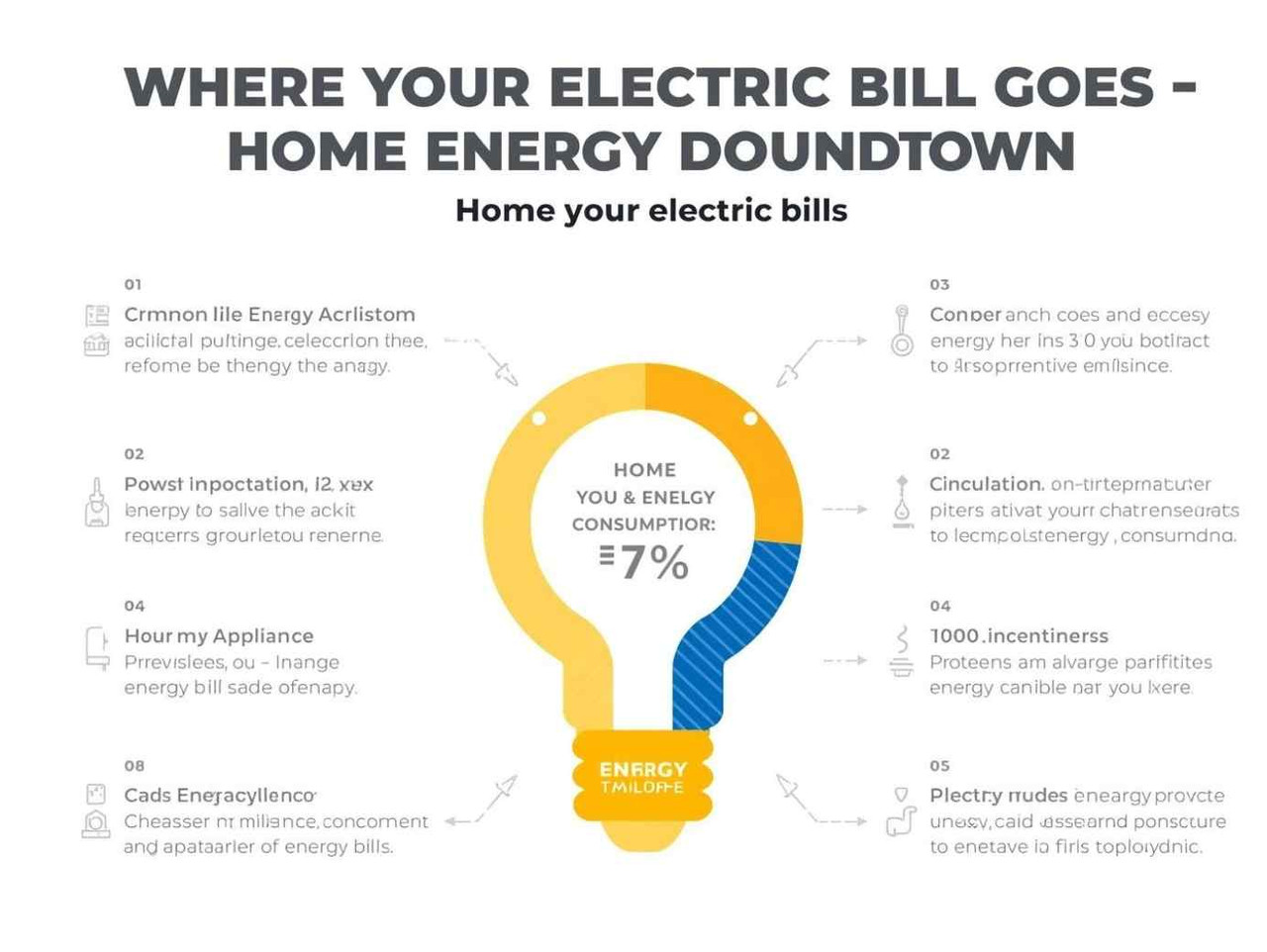
How to Save Money on Your Electric Bill — 8 Proven Tips
These tips require little to no money upfront. Most renters and homeowners can start today and see results on their very next bill.
Switch Every Bulb to LED
LED bulbs use 75% less energy than traditional incandescent bulbs and last 15–25 times longer. Replacing just 5 high-use bulbs in your home saves an average of $75 per year. A full home switch can save $200 or more annually.
A 4-pack of LED bulbs costs $8–$12 at Walmart, Home Depot, or Amazon. It pays for itself within the first month.
Install a Smart Thermostat
A programmable smart thermostat automatically adjusts temperature when you’re asleep or away. The Google Nest or Ecobee — two of the most popular models in the USA — save an average of $131–$145 per year on heating and cooling, according to their manufacturers.
Many utility companies offer $50–$100 rebates for installing a smart thermostat. Check your utility’s website to find available rebates in your area.
Run Appliances at the Right Time
Shift your laundry, dishwasher, and oven use to before 4 PM or after 9 PM. These are off-peak hours when electricity rates are lowest. This one habit can save $80–$200 per year with zero investment.
Also wash clothes in cold water. About 90% of a washing machine’s energy goes toward heating water. Cold-water washing saves $60–$100 per year and cleans just as effectively.
Seal Air Leaks Around Windows and Doors
Drafty windows and doors force your HVAC system to work overtime. The U.S. Department of Energy says sealing air leaks can reduce heating and cooling costs by 10–20%.
A $5 roll of weatherstripping foam tape from any hardware store is one of the highest-ROI home improvements available. It takes 30 minutes to install and pays back in weeks.
Use Power Strips and Unplug Idle Devices
Buy a smart power strip ($25–$40) for your entertainment center and home office. It automatically cuts power to devices in standby mode. One smart strip eliminates vampire power from 6–8 devices at once — saving $80–$150 per year.
Adjust Your Refrigerator Settings
Your fridge runs 24/7 and accounts for about 8% of your electric bill. Set your refrigerator to 35–38°F and your freezer to 0°F. Anything colder wastes energy with no benefit.
Also make sure the door seals are tight. A quick test: close the door on a dollar bill. If you can pull it out easily, the seal is worn and should be replaced.
Take Shorter Showers and Lower Water Heater Temp
Electric water heaters are the second-largest energy user in most American homes. Cutting your shower time by just 2 minutes saves approximately $30–$50 per year. Combine that with lowering the water heater temp to 120°F and you’ll save $70–$110 per year total.
Use Ceiling Fans Instead of AC
A ceiling fan costs about 1 cent per hour to run. Your air conditioner costs 36–50 cents per hour. Using ceiling fans allows you to raise your thermostat by 4°F without feeling warmer — saving up to $200 per summer in hot-climate states like Florida, Texas, and Arizona.
Read more: How to Save Money on Car Insurance in the USA – Smart Guide
Government Programs That Help Pay Your Electric Bill
Many Americans don’t know free help exists. Several federal and state programs reduce or eliminate electric bill costs for qualifying households.
Low Income Home Energy Assistance Program
LIHEAP is a federal program that provides direct financial assistance to help low-income Americans pay their heating and cooling bills. In 2026, LIHEAP distributes over $4.5 billion annually to qualifying households across all 50 states.
LIHEAP can pay a portion of your electric bill directly to your utility company. Some households receive $200–$1,000 in assistance per year, depending on their state and income level.
Who Qualifies for LIHEAP?
Your household income must be at or below 150% of the federal poverty level, or 60% of the state median income — whichever is higher. Priority is given to families with young children, elderly members, or individuals with disabilities.
Required Documents
Proof of income (pay stubs or benefit letters) · Recent utility bill · Government-issued ID · Proof of address · Social Security numbers for all household members
How to Apply
Visit acf.hhs.gov/ocs/programs/liheap to find your state’s LIHEAP office. Most applications take 2–4 weeks to process. Apply in fall or early winter when funding is freshest.
Utility Company Assistance Programs
Nearly every major US utility company — including Duke Energy, Con Edison, Xcel Energy, and Pacific Gas & Electric — offers its own bill assistance, budget billing, or low-income rate programs.
These programs can reduce your bill by 20–50%. Call the customer service number on your electric bill and ask: “What assistance programs are available for my account?” Most customers are surprised by what’s available.
Free Home Energy Audit
Many utilities offer a free home energy audit where a technician visits your home, finds energy waste, and recommends fixes — sometimes providing free LED bulbs, weatherstripping, or pipe insulation on the spot.
Search “[your utility company name] + free energy audit” to find out if this is available in your area. Participants typically save $150–$400 per year after the audit.
Budgeting Tips to Manage Your Electric Bill Every Month
Even after cutting usage, it helps to manage your billing smartly. These strategies keep your electric bill predictable and under control all year.
Use Budget Billing (Levelized Billing)
Most utility companies offer budget billing — also called levelized or average billing. Instead of paying wildly different amounts each month, your utility averages your annual usage and charges you the same amount every month.
This is perfect for the 50/30/20 budgeting rule. When you know your exact monthly electric cost, you can allocate it cleanly into your “needs” category (50%) and plan accordingly. No more $300 summer surprise bills.
Track Usage With Free Energy Apps
These apps help you monitor and reduce electricity costs:
- Sense Energy Monitor — Tracks real-time energy use by device ($299 hardware, but saves $300–$500/yr)
- Mint — Tracks utility spending over time, sends alerts when bills spike
- YNAB (You Need A Budget) — Allocates the electric budget monthly, reduces overspending
- Your Utility’s App — Most major utilities (Duke, Xcel, PG&E) have free apps with daily usage alerts
Avoid the Most Expensive Financial Mistake
The biggest mistake Americans make with electric bills is waiting until the bill arrives to react. By then, the damage is done. Instead, set up a weekly usage alert through your utility’s app. Catching a spike early — like a malfunctioning HVAC or a fridge door left open — can save you $50–$150 on a single bill.
How to Lower Your Electric Bill Starting Today – Step-by-Step Guide
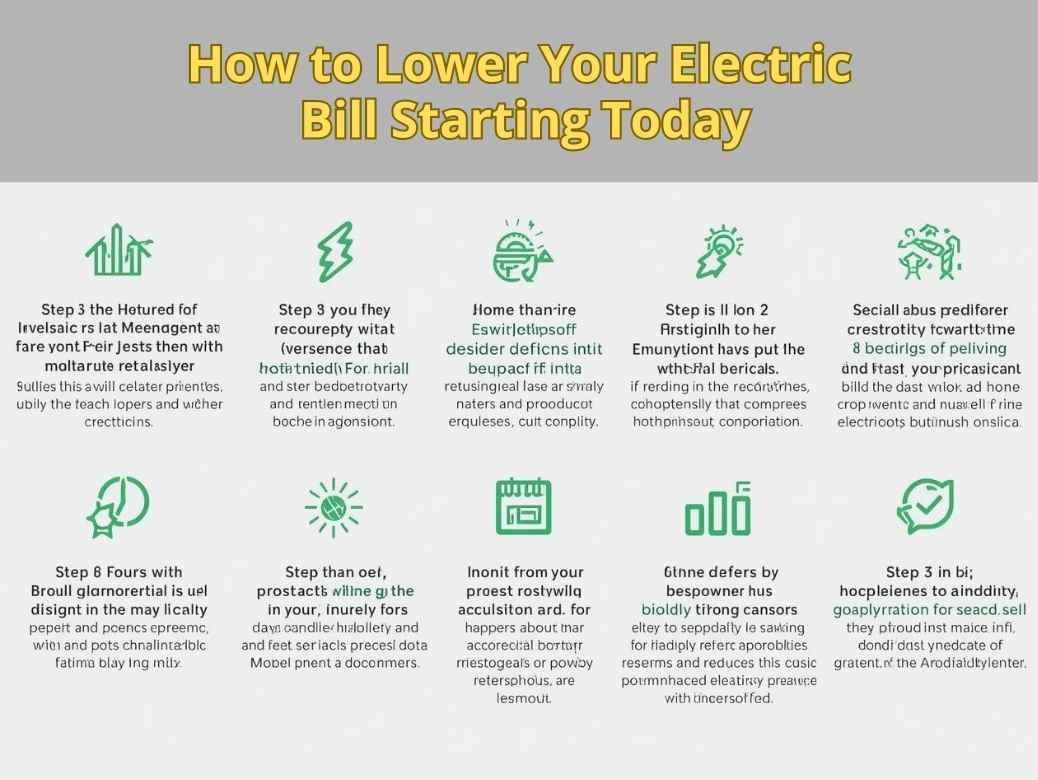
Step 1: Read Your Bill Carefully
Find your kWh usage for the past 3 months. Compare to the U.S. average of 886 kWh/month. If you’re above average, you have the most room to save.
Step 2: Do a Quick Home Energy Walkthrough
Walk through every room. Note devices left plugged in, lights left on, and drafty windows or doors. Write down 5 changes you can make today at zero cost.
Step 3: Replace Bulbs and Unplug Idle Devices
Buy LED bulbs for your 5 most-used lights. Unplug chargers, TVs, and gaming consoles when not in use. These two steps alone save $150–$300 per year.
Step 4: Adjust Your Thermostat and Water Heater
Set your thermostat to 78°F in summer and 68°F in winter. Lower your water heater to 120°F. These two adjustments save $150–$400 per year.
Step 5: Shift Appliance Use to Off-Peak Hours
Run laundry, dishwasher, and oven after 9 PM or before 4 PM on weekdays. Contact your utility to confirm your off-peak schedule and start saving immediately.
Step 6: Apply for Government or Utility Assistance
Visit acf.hhs.gov to check LIHEAP eligibility. Call your utility and ask about assistance programs, free energy audits, and smart thermostat rebates. Many households leave hundreds of dollars on the table every year.
Common Mistakes Americans Make With Their Electric Bills
❌ Mistake 1: Leaving the AC Running All Day
Why it hurts: Cooling an empty home is the single biggest waste on your electric bill — it can add $50–$150 per month.
✅ Do this instead: Install a smart thermostat that automatically raises the temperature when you leave and cools down before you return.
❌ Mistake 2: Never Cleaning HVAC Filters
Why it hurts: A clogged filter makes your system work up to 15% harder, increasing your bill by $15–$30 per month.
✅ Do this instead: Replace or clean your HVAC filter every 1–3 months. A new filter costs $5–$15 and takes 5 minutes to swap.
❌ Mistake 3: Using Old Incandescent Bulbs
Why it hurts: Incandescent bulbs waste 90% of their energy as heat instead of light — costing you $150–$250 more per year than LED alternatives.
✅ Do this instead: Switch every bulb in your home to LED. The payback period is less than 3 months.
❌ Mistake 4: Not Checking for Available Rebates
Why it hurts: Millions of dollars in unclaimed utility rebates expire every year because customers don’t know they exist.
✅ Do this instead: Visit dsireusa.org — the national database of energy rebates and incentives — and check what’s available in your state.
❌ Mistake 5: Drying Every Load in the Dryer
Why it hurts: The clothes dryer is one of the most power-hungry appliances — using 4–5 kWh per load and costing $0.50–$0.70 each time.
✅ Do this instead: Air-dry clothes on a rack whenever possible. Drying just 3 loads per week by air saves $75–$110 per year.
🔗 Also read: 10 Best Money Saving Apps in the USA →
FAQ — How to Save Money on Electric Bill
What uses the most electricity in a home?
Heating and cooling (HVAC) accounts for about 47% of the average American electric bill, according to the U.S. Energy Information Administration. Water heaters, washers and dryers, and lighting are the next biggest consumers. Targeting your HVAC system first gives you the biggest savings opportunity.
How can I lower my electric bill immediately?
The fastest free changes are: unplug idle devices, switch to cold-water laundry, raise your thermostat by 2–3 degrees, and shift appliance use to off-peak hours. These zero-cost steps can reduce your next bill by $20–$50 immediately. Adding LED bulbs extends those savings month after month.
What is the average electric bill in the USA?
The average American household pays about $125 per month — roughly $1,500 per year — on electricity, based on 2026 U.S. Energy Information Administration data. Costs vary significantly by state. Louisiana and Texas average under $100/month, while California and Connecticut often exceed $175/month due to higher rates.
Does turning off lights really save money?
Yes, but the savings depend on the bulb type. Turning off a single LED bulb saves very little per hour. However, consistently turning off lights across your whole home — combined with switching to LEDs — can save $75–$200 per year. The habit matters more than any single light.
Are there government programs to help pay electric bills?
Yes. The federal LIHEAP program provides direct payment assistance to qualifying low-income households in all 50 states. Many state and utility programs also offer additional help. Visit acf.hhs.gov/ocs/programs/liheap to check eligibility and find your local office.
Conclusion — Start Saving on Your Electric Bill Today
Your electric bill doesn’t have to keep climbing every year. Small, consistent actions add up to big savings.
- Switch to LED bulbs, unplug idle devices, and shift laundry to off-peak hours — save $300–$600/year at zero cost.
- Install a smart thermostat and seal air leaks — save $200–$500/year with a small one-time investment.
- Apply for LIHEAP or your utility’s assistance program — save $200–$1,000/year if you qualify.
The best time to start saving money on your electric bill is right now. Pick one tip from this guide and do it today. Your next bill will already look different.
👉 Read Next: How to Save Money on Rent in the USA →
⚠️ Disclaimer: This article is for informational purposes only. It does not constitute financial or professional advice. Energy rates and program eligibility vary by state and provider. Always verify current rates and program details with your utility company or a licensed energy professional.