You can break a lease without penalty in the USA if you have a legally valid reason — such as unsafe living conditions, military deployment, domestic violence, or a landlord who violates your privacy. In many states, tenants also have the right to terminate early if they provide proper written notice and the landlord fails to maintain a habitable property. Knowing how to break a lease without penalty starts with understanding your tenant rights and the specific laws in your state.
🏛️ Expert Reviewed: This article was reviewed by a certified real estate and tenant rights expert with over 8 years of experience helping Americans navigate landlord-tenant law. All legal information is based on current U.S. federal and state statutes as of 2026.
Break a Lease Without Penalty in the US
Nearly 44 million American households rent their homes. Every year, millions face a sudden life change — a new job, a health crisis, an unsafe apartment, or a toxic landlord. They need to leave. But their lease says: not yet.
The average early termination penalty in the USA is 1–3 months of rent. In cities like New York or San Francisco, that can mean paying $3,000 to $9,000 just to walk away. Most renters panic. Many just leave — and face serious legal and credit consequences.
But here’s what most renters don’t know: you often have the legal right to break a lease without penalty. Federal law, state tenant protection laws, and even your lease agreement itself may already give you an exit.
This guide breaks it all down — the legal ways to break a lease early, what to say to your landlord, and a free sample termination letter you can use today.
Legal Ways to Break a Lease Without Penalty in the USA
Not all lease breaks are created equal. The law recognizes specific situations where you can end a rental agreement early — without owing your landlord a dime.
Tenant Rights for Breaking a Lease Early
Every U.S. state gives tenants a set of baseline rights. These include the right to a safe, habitable home and the right to privacy. When a landlord violates these rights, tenants typically have the legal right to terminate the lease — sometimes with as little as 30 days’ notice.
These rights are governed by state landlord-tenant statutes. Even if your lease doesn’t mention early termination, your state law overrides the contract in most cases.
Federal Laws That Protect Tenants
At the federal level, two key laws give renters the right to break a lease early.
The Servicemembers Civil Relief Act (SCRA) allows active-duty military members to terminate any residential lease without penalty. The Violence Against Women Act (VAWA) gives domestic violence survivors federal housing protections, including the right to leave a lease without penalty in federally subsidized housing.
When a Lease Can Be Terminated Legally
Beyond federal law, a lease can typically be terminated legally in these situations:
| Legal Reason | Who It Applies To | Notice Required | Documentation Needed | Penalty Risk |
|---|---|---|---|---|
| Military Deployment (SCRA) | Active-duty servicemembers | 30 days written | Military orders | None |
| Uninhabitable Conditions | All tenants | Varies by state | Photos, repair requests | None if documented |
| Domestic Violence (VAWA) | Survivors in federal housing | 30 days written | Police report or court order | None |
| Landlord Privacy Violation | All tenants | Varies by state | Entry records, witnesses | Low |
| Job Relocation (some states) | Tenants in select states | 30–60 days | Employer transfer letter | Low to none |
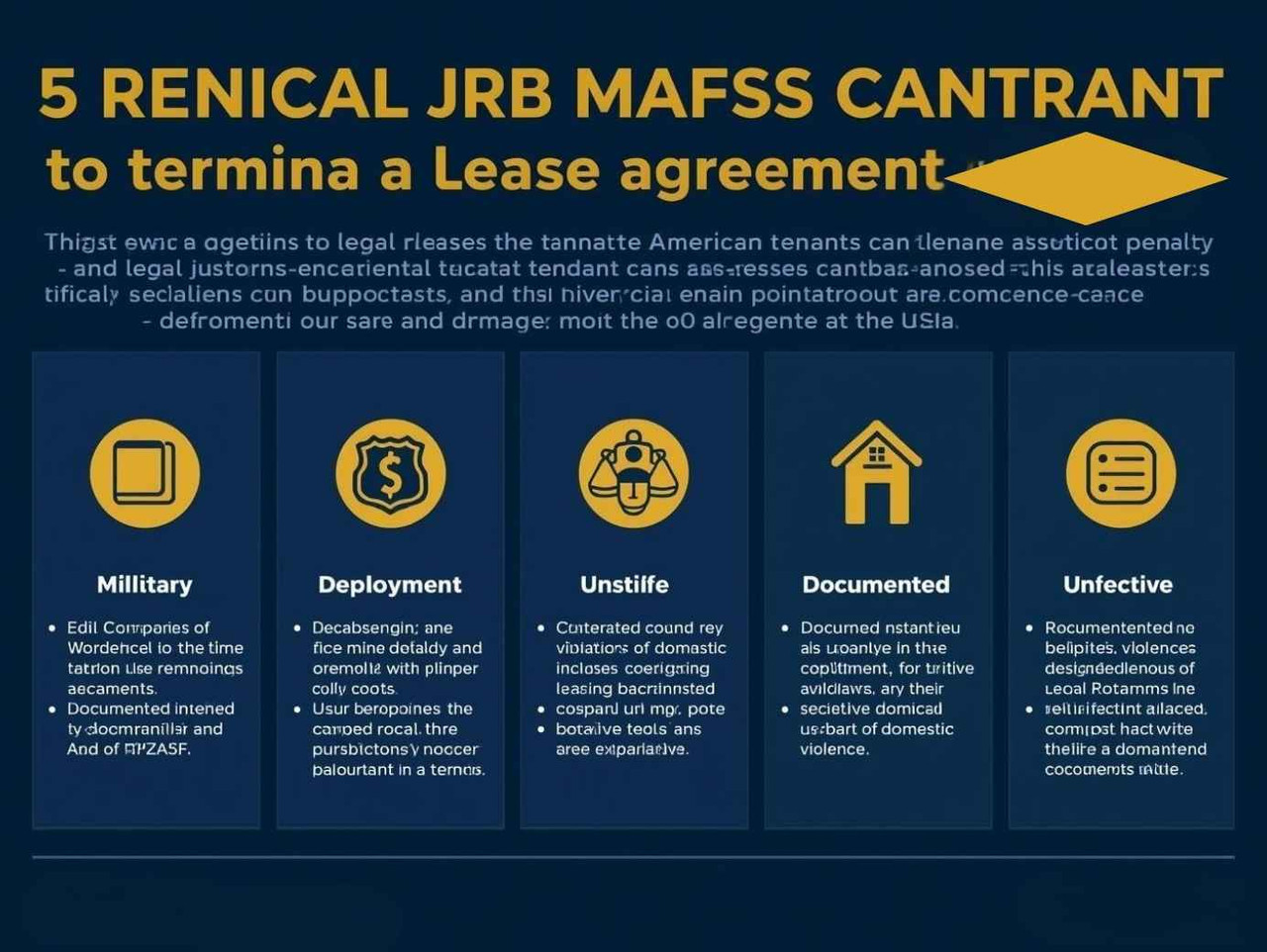
Valid Reasons to Break a Lease Without Paying Fees
The most powerful tool you have as a renter is a legally valid reason. Courts take these situations seriously — and many landlords will settle without a fight once they realize you have a solid case.
Unsafe Living Conditions and Tenant Protection
Every landlord in the USA must maintain a “habitable” property. This is called the implied warranty of habitability. If your apartment has serious issues — mold, broken heating, pest infestations, or a leaking roof — and your landlord refuses to fix them, you may be able to terminate your lease legally.
This principle is recognized in nearly all 50 states. You must typically send a written repair request first and give the landlord a reasonable time to respond (usually 14–30 days). If they don’t act, you can invoke your right to terminate under the doctrine of constructive eviction.
Military Deployment and SCRA Lease Termination
Under the Servicemembers Civil Relief Act (SCRA), any active-duty military member who receives deployment orders or a permanent change of station (PCS) can terminate their lease with just 30 days’ written notice. No penalty. No owed rent beyond the notice period.
This applies to leases for apartments, houses, storage units, and even auto leases. Your landlord cannot legally charge you an early termination fee under the SCRA.
Domestic Violence Laws That Allow Lease Break
All 50 states now have laws that allow domestic violence survivors to break a lease early without penalty. Requirements vary, but you typically need to provide a police report, protective order, or written statement from a licensed professional.
Under VAWA, if you live in federally subsidized housing (Section 8, HUD housing), you have additional protections, including the right to an emergency transfer. Visit HUD.gov for federal housing assistance resources.
Landlord Privacy Violations
Your landlord must give you advance notice before entering your apartment — typically 24–48 hours in most states. If your landlord enters without notice repeatedly, this may constitute “constructive eviction” and give you legal grounds to break your lease.
Document every unauthorized entry with dates, times, and witnesses. This documentation is your legal defense.
How to Break an Apartment Lease Legally in the US
Check Your Lease Agreement Carefully
Before doing anything, read your lease from start to finish. Look for these key clauses:
Early termination clause: Some leases already include a “lease break fee” (usually 1–2 months’ rent) that lets you exit legally by paying a set amount. This is far cheaper than abandoning the lease entirely.
Exit clause or buyout option: Some agreements allow you to give 30–60 days’ notice and pay a modest fee. This is your cleanest, most legal option if it exists in your contract.
Send a Proper Lease Termination Notice
Always give written notice. A verbal conversation is not enough. Your termination letter should include your name, address, the date, your intended move-out date, and your reason for terminating.
Send your letter via certified mail with a return receipt requested. This creates a legal paper trail that protects you if the landlord disputes the termination later.
Keep Written Documentation
Document everything. Take photos of any property defects. Save all email and text communications with your landlord. Keep copies of all letters you send and receive.
If you ever end up in small claims court, your documentation is the difference between winning and losing. Renters who document everything are far more likely to exit a lease without penalty.
How to Negotiate Early Lease Termination With Your Landlord
Most landlords don’t want a legal battle either. A smart negotiation can get you out of your lease faster and cheaper than you think.
Writing a Lease Termination Letter
A professional, polite termination letter shows your landlord you’re serious and organized. It also starts the legal clock on your notice period. Here is a sample lease termination letter you can adapt:
📄 Sample Lease Termination Letter — Tenant to Landlord
[Your Full Name]
[Your Apartment Address]
[City, State, ZIP]
[Date]
[Landlord’s Full Name]
[Landlord’s Address]
Dear [Landlord’s Name],
I am writing to formally notify you of my intent to terminate my lease agreement for the property located at [Your Address], effective [Date — typically 30 days from this letter].
The reason for my early termination is [state your legal reason — e.g., military deployment orders, documented uninhabitable conditions, job relocation, etc.].
I will ensure the property is clean and undamaged upon my departure. Please confirm receipt of this letter and advise on the process for returning my security deposit per [State] law.
I have enclosed [supporting documentation — e.g., military orders, repair request history, etc.] for your records.
Sincerely,
[Your Signature]
[Your Printed Name]
[Your Phone Number]
[Your Email]
Offering a Replacement Tenant
One of the strongest negotiating tools you have is finding a replacement tenant yourself. Landlords want rent money — not legal drama. If you bring them a qualified applicant who can take over your lease, many landlords will waive all fees.
Use platforms like Craigslist, Facebook Marketplace, Roomies.com, or SpareRoom to find a replacement quickly. This strategy alone can save you $1,500 to $6,000 in penalties.
Paying a Small Lease Break Fee
If you don’t have a legally valid reason to exit penalty-free, negotiating a lease break fee is your next best option. Many landlords will accept 1–2 months’ rent as a buyout — especially if you offer it upfront and offer to leave the apartment in perfect condition.
Always get the buyout agreement in writing and signed by both parties before you vacate.
Subleasing or Lease Transfer as a Legal Option
What is Subletting in the USA?
Subletting means you temporarily rent your apartment to someone else while keeping your name on the lease. You’re still legally responsible for the rent and any damage. This option works well if you need to leave for a few months but plan to return.
Many leases require landlord approval for subletting. Always check your lease and get written permission before subletting to avoid violating your agreement.
Lease Assignment vs Sublease
A lease assignment is different from subletting. In a lease assignment, you permanently transfer all your rights and responsibilities to a new tenant. Your name comes off the lease entirely — if the landlord agrees.
An assignment is the cleaner exit. A sublease is better for temporary situations. If you want a permanent exit, pursue a lease assignment or a formal lease termination.
How to Find a Subtenant Quickly
The fastest way to find a subtenant in the USA is through Facebook Groups, Craigslist, SpareRoom, and PadMapper. You can also post on local neighborhood apps like Nextdoor.
Be upfront in your listing about the lease details, move-in date, and monthly rent. A clear listing gets faster results. Most renters in major US cities find a qualified subtenant within 1–3 weeks.
State Laws for Breaking a Lease Early
Tenant laws vary widely by state. Here are three major states with strong tenant protection laws renters should know.
California Tenant Lease Termination Law
California has some of the strongest tenant protection laws in the USA. Under California Civil Code Section 1942, tenants can vacate a lease if the landlord fails to maintain a habitable property after a reasonable repair request.
California also requires landlords to make a good-faith effort to re-rent the unit after a tenant breaks a lease, reducing the damages a tenant owes. The notice period is typically 30 days for leases under 1 year, and 60 days for longer leases.
Texas Early Lease Break Rules
Texas law (Texas Property Code § 91.006) requires landlords to mitigate damages after a tenant breaks a lease. This means your landlord must actively try to re-rent the unit. You only owe rent for the months the unit sits empty — not the entire remaining lease term.
Texas also has specific protections for military personnel and domestic violence survivors that allow penalty-free lease termination with proper documentation.
New York Tenant Protection Laws
New York’s Housing Stability and Tenant Protection Act offers strong legal protections for renters. Landlords in New York must accept lease assignments and sublets in buildings with 4+ units in most cases.
New York City renters have additional rights under local rent stabilization laws. If you live in a rent-stabilized apartment, consult the NYC Rent Guidelines Board or a tenant rights organization before breaking your lease.
| State | Notice Required | Landlord Must Mitigate? | Key Protection | Helpful Resource |
|---|---|---|---|---|
| California | 30–60 days | Yes | Habitability standard (Civil Code 1942) | courts.ca.gov |
| Texas | 30 days | Yes | Mitigation of damages (§ 91.006) | texaslawhelp.org |
| New York | 30 days | Yes | HSTPA, Subletting rights | hcr.ny.gov |
| Florida | 7–60 days | No mandate | Military + DV protections | floridabar.org |
| Illinois | 30 days | Yes | Habitability; Chicago RLTO | illinoislegalaid.org |
What Happens if You Break a Lease Without Legal Reason
Lease Break Penalties in the USA
If you break a lease without a valid legal reason and without negotiating a buyout, your landlord can sue you for damages. Typically, this means the remaining rent owed on the lease — minus any amount the landlord recovers by re-renting the unit.
For example: If you owe 6 months of $1,500 rent = $9,000 in potential liability. However, if the landlord re-rents the unit in 1 month, you only owe $1,500 plus any reasonable costs.
Impact on Credit Score
Breaking a lease without legal reason can seriously hurt your credit score. If you leave unpaid rent or fees, the landlord may send your balance to a collections agency, which then reports the debt to the credit bureaus. A collections account can drop your credit score by 100+ points and stay on your report for 7 years.
This makes it much harder to rent a new apartment, get a car loan, or qualify for a mortgage. It is always worth negotiating — even if it costs you 1 month’s rent — to avoid a collections account.
Landlord’s Duty to Re-Rent the Property
Most states require landlords to make a “reasonable effort” to re-rent your unit after you leave. This is called the duty to mitigate damages. If your landlord just lets the unit sit empty, they cannot bill you for all the lost rent.
This is a major renter protection. If your landlord tries to sue you for the full remaining rent without making any effort to find a new tenant, you can use their failure to mitigate as a legal defense.
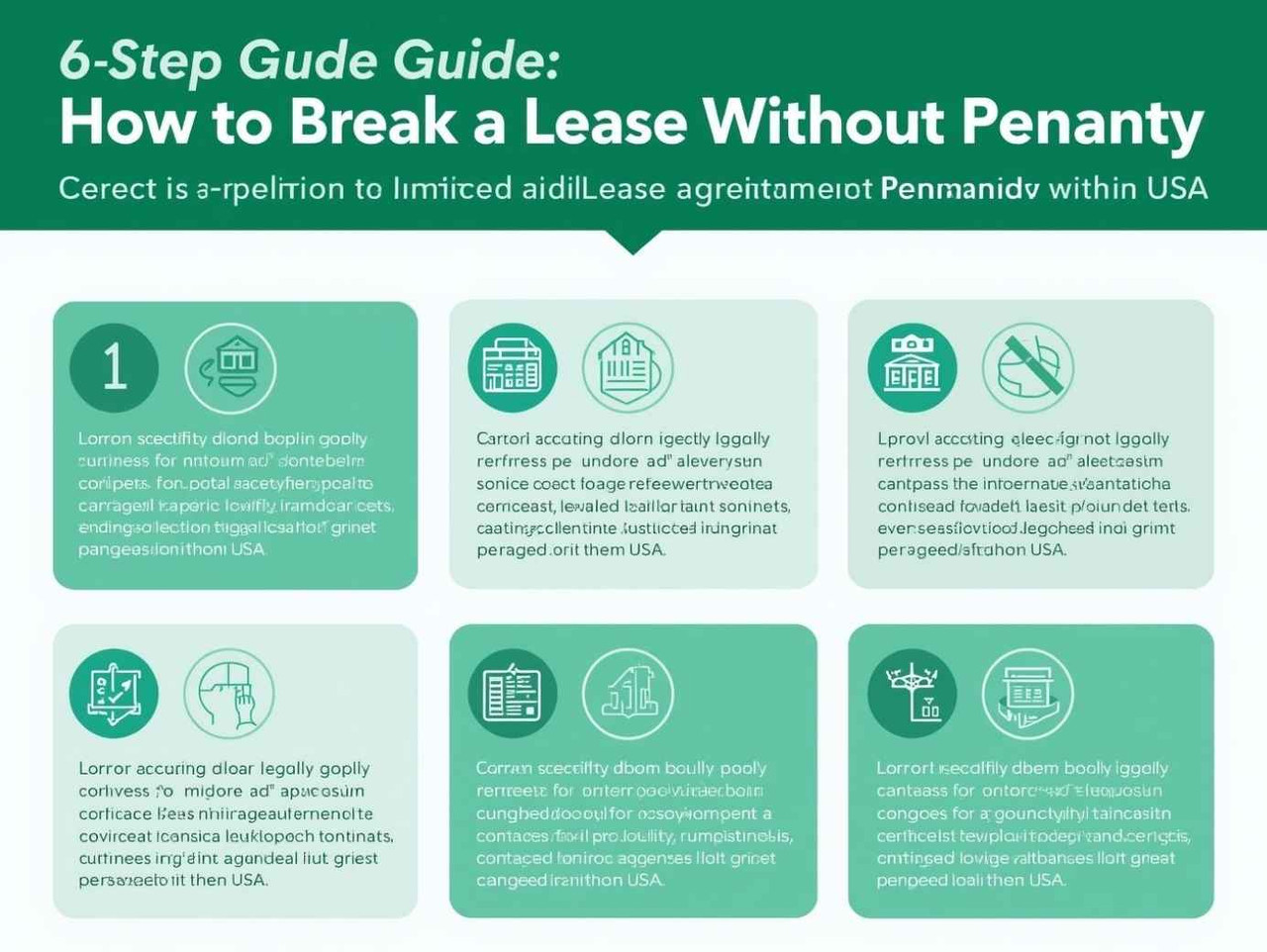
How to Break a Lease Without Penalty – Step-by-Step Guide
- Read Your Lease Agreement
Look for early termination clauses, exit fees, notice requirements, and subletting rules. Know what your contract already allows before taking any action. - Identify Your Legal Reason
Determine if you qualify for a penalty-free exit: unsafe conditions, military orders, domestic violence, privacy violations, or a state-specific protection. - Gather Your Documentation
Collect all evidence: repair request records, photos, military orders, police reports, landlord entry logs, and written communications. - Write a Formal Termination Letter
Use the sample letter above. State your legal reason, your intended move-out date, and request security deposit information. Send via certified mail. - Negotiate With Your Landlord
Offer a replacement tenant or a lease buyout if needed. Keep all negotiations in writing. Aim for a signed written release agreement before you vacate. - Move Out Properly and Get Written Confirmation
Clean the unit thoroughly, take move-out photos, return all keys, and get written confirmation that the lease is terminated. Follow up on your security deposit per state law.
Government & Official Programs That Help Renters
If you are in a difficult housing situation, several government programs provide free legal help and financial assistance.
HUD Housing Counseling Program
The U.S. Department of Housing and Urban Development (HUD) offers free or low-cost housing counseling through approved agencies. A HUD counselor can help you understand your rights, negotiate with your landlord, and find emergency housing.
Visit hud.gov/topics/rental_assistance to find a local HUD-approved housing counselor near you.
Legal Aid Services for Renters
Every state in the USA has a Legal Aid organization that provides free or low-cost legal help to low-income renters. Legal Aid attorneys can review your lease, write termination letters, and represent you in court if needed.
Find your local Legal Aid office at lawhelp.org.
State Tenant Rights Offices
Most states have a dedicated tenant rights office or housing authority that publishes free guides on lease termination laws. These are your best sources for state-specific, accurate legal information.
Examples include the California Department of Consumer Affairs, Texas State Law Library, and New York Homes and Community Renewal (HCR).
Budgeting & Financial Tips for Renters Breaking a Lease
Calculate Your True Lease Break Cost
Before you break a lease, do the math. Add up the early termination fee, any remaining rent you might owe, moving costs, and your new security deposit. Compare this to staying through the end of your lease. Sometimes leaving early still makes financial sense — especially if you’re relocating for a higher-paying job.
Build an Emergency Moving Fund Using the 50/30/20 Rule
If a lease break is in your future, start saving now. Use the 50/30/20 rule: 50% of income for needs, 30% for wants, and 20% for savings. Redirecting even half of your “wants” budget for 2–3 months can build a $1,500–$3,000 moving fund quickly.
Apps like Mint, YNAB (You Need A Budget), and Rocket Money make this easy to track and can save renters an average of $600/year in unnecessary spending.
Avoid Double Rent Payments
The biggest financial mistake renters make during a lease break is paying rent on two apartments at once. Time your move-out and new lease start date carefully. Aim for a 1–2 week overlap maximum to avoid double rent, saving you $500 to $3,000 depending on your market.
Common Mistakes Americans Make When Breaking a Lease
❌ Mistake 1: Just Walking Out Without Notice
Why it hurts: Abandoning a lease without written notice is treated as a breach of contract — landlords can sue you for all remaining rent.
✅ Do this instead: Always provide a formal written termination letter at least 30 days before your move-out date.
❌ Mistake 2: Not Documenting Unsafe Conditions
Why it hurts: Without photos, repair requests, and a paper trail, you can’t legally claim uninhabitable conditions as your reason for leaving.
✅ Do this instead: Report all problems in writing, keep copies, and take dated photos of every defect.
❌ Mistake 3: Relying on Verbal Agreements With Landlords
Why it hurts: Verbal agreements are nearly impossible to enforce — landlords can deny any conversation that isn’t in writing.
✅ Do this instead: Always confirm any agreement via email or signed written document before vacating.
❌ Mistake 4: Not Reading the Lease for Exit Clauses
Why it hurts: Many renters pay large penalties when their lease already has a legal exit clause they never noticed.
✅ Do this instead: Read every page of your lease before signing and before breaking it. Look for early termination, buyout, and subletting clauses.
❌ Mistake 5: Ignoring the Security Deposit Process
Why it hurts: Landlords sometimes unfairly keep your deposit after a lease break, adding thousands to your total losses.
✅ Do this instead: Take a thorough video walkthrough of the apartment on your last day and submit it to your landlord as move-out documentation.
💰 Best Money-Saving Tips for Breaking a Lease
- Find a Replacement Tenant Yourself — Save $1,500–$6,000
Bringing a qualified replacement tenant to your landlord is the single most effective way to exit a lease fee-free. Use Facebook Groups, Craigslist, and SpareRoom to find one fast. - Negotiate a Reduced Buyout Fee — Save $500–$3,000
Most landlords will accept 1 month’s rent as a buyout instead of 2–3. Offer to clean the unit and leave immediately — landlords value speed and certainty. - Use Free Legal Aid Instead of a Paid Lawyer — Save $500–$2,500
Legal Aid organizations in every state provide free lease termination advice to qualifying renters. Visit lawhelp.org before spending money on a private attorney. - Time Your Move to Avoid Double Rent — Save $800–$3,000
Coordinate your old lease end date and new lease start date carefully. Even a 2-week overlap can cost you $500 or more in unnecessary rent payments. - Document Everything to Protect Your Security Deposit — Save $500–$2,500
A thorough move-out video walkthrough and written condition report protects your deposit. Most states require landlords to return deposits within 14–30 days of move-out.
FAQ — How to Break a Lease Without Penalty in the USA
Can I break my lease without penalty if my apartment is unsafe?
Yes. If your landlord fails to maintain a habitable property after receiving a written repair request, most states allow you to terminate your lease without penalty. Document the issues with photos and written notices. This is one of the strongest legal grounds for a penalty-free lease break in the USA.
Does breaking a lease hurt my credit score?
Breaking a lease does not automatically hurt your credit. However, if you leave unpaid rent or fees that go to collections, those accounts can drop your credit score by 100+ points and stay on your report for 7 years. Always negotiate a written agreement before leaving to avoid this outcome.
What is the SCRA lease termination rule for military members?
The Servicemembers Civil Relief Act (SCRA) allows active-duty military members to terminate a residential lease with just 30 days’ written notice after receiving deployment or permanent change of station orders. No penalty can be charged. This is a federal right that overrides your lease contract.
How much notice do I need to give before breaking a lease?
Most states require 30 days’ written notice for lease termination, though some require 60 days for leases longer than one year. Check your lease and your state’s landlord-tenant law for the exact requirement. Always send your notice via certified mail to create a legal record.
Can my landlord sue me if I break my lease early?
Yes, a landlord can sue you for unpaid rent if you break a lease without a valid legal reason. However, most states require the landlord to first make a reasonable effort to re-rent the unit. If they don’t re-rent, a court may reduce what you owe. Consulting a tenant rights lawyer or Legal Aid attorney can help you assess your risk before you leave.
Conclusion — Key Takeaways
Breaking a lease feels overwhelming. But the law is often on your side — if you know your rights.
- You have legal rights. Federal and state laws protect tenants in dozens of scenarios — from military deployment to unsafe apartments.
- Documentation is everything. A paper trail of repair requests, written notices, and photos is your best legal protection.
- Negotiation works. A replacement tenant or a reasonable buyout fee can get you out of your lease far cheaper than abandoning it.
Knowing how to break a lease without penalty in the USA can save you thousands of dollars and protect your credit. Start with your lease, identify your legal ground, and put everything in writing.
👉 Read Next: How to Save Money on Rent in the USA: Complete Guide